
 EN
EN
When it comes to outdoor illumination, solar lights have transformed the way homeowners and businesses approach energy-efficient lighting. The appeal is obvious — no wiring costs, no electricity bills, and installation flexibility that hardwired solutions simply cannot match. But not all solar lights are created equal. Choosing the right one requires understanding three critical performance factors: brightness output, battery capacity, and long-term durability. Without comparing these dimensions carefully, you risk investing in a product that underperforms or deteriorates prematurely.
This comparison guide is designed to help you evaluate solar lights with precision and confidence. Whether you are outfitting a residential patio, a commercial landscape, or an architectural pergola structure, understanding how brightness levels, battery technology, and material durability stack up will ensure you make a decision that serves both aesthetic and functional goals for years to come. The goal here is not to promote a single product but to equip you with a structured framework for meaningful comparison.
Understanding Brightness in Solar Lights
Lumens as the True Measure of Light Output
When comparing solar lights, the first metric most buyers encounter is wattage — but wattage alone is a misleading benchmark for solar-powered products. The correct unit of measurement for brightness is lumens, which quantifies the total amount of visible light emitted by a source. A solar light rated at 200 lumens will deliver noticeably different illumination than one rated at 800 lumens, and understanding this difference is essential for matching the light to its intended application.
For accent and pathway lighting, outputs in the range of 50 to 200 lumens are often sufficient. Security lighting and area coverage, on the other hand, typically require 400 to 1000 lumens or more. When evaluating solar lights for a covered pergola or outdoor lounge space, you want enough brightness to create ambiance and functionality without causing glare. The balance between luminous output and atmospheric quality is one of the most underappreciated aspects of outdoor solar lighting design.
It is also worth noting that solar lights do not maintain constant brightness throughout the night. As battery reserves deplete, many models automatically dim to extend operating hours. High-quality products compensate for this with intelligent power management systems that maintain usable brightness for longer periods. When comparing options, look for products that specify their rated lumen output at both full brightness and in energy-saving modes.
LED Chip Quality and Light Distribution
The type and quality of LED chips used in solar lights directly affects not just brightness but also color rendering and beam distribution. High-grade LEDs maintain consistent output over time and have longer lifespans — often exceeding 50,000 hours. Lower-quality chips may appear equally bright in initial tests but degrade significantly within the first year of use, leading to noticeable yellowing or dimming.
Color temperature is another dimension of brightness performance. Solar lights commonly range from warm white (2700K–3000K) to cool white (5000K–6500K). Warm white tones are more suitable for residential outdoor settings like patios and pergolas, creating an inviting atmosphere. Cool white tones are preferable for security applications where sharp visibility is the priority. A product's light distribution pattern — whether flood, spot, or diffused — also determines how effectively the lumens translate into usable illumination across a given area.
Battery Technology and Runtime Performance
Battery Types Found in Solar Lights
The battery is arguably the most important internal component of any solar light system, as it determines how long the light will operate after the sun sets. The two dominant battery chemistries used in modern solar lights are lithium-ion (Li-ion) and lithium iron phosphate (LiFePO4). Each has distinct advantages, and understanding them is critical when making a comparative decision.
Lithium-ion batteries are compact, lightweight, and offer high energy density, making them ideal for smaller, aesthetically focused solar lights. LiFePO4 batteries, while slightly bulkier, offer superior thermal stability, a longer cycle life, and improved performance in extreme temperatures. For outdoor applications in regions with harsh winters or intense summer heat, LiFePO4 chemistry provides more reliable long-term performance. When evaluating solar lights, always check whether the battery chemistry is specified — its absence often signals lower-grade components.
Older models of solar lights still use nickel-metal hydride (NiMH) or nickel-cadmium (NiCd) batteries. These are generally less efficient, have shorter cycle lives, and are more susceptible to the memory effect that reduces effective capacity over time. If you are comparing a legacy product against a newer lithium-based option at similar price points, the lithium solution will almost always provide better overall value in terms of runtime and longevity.
Charge Cycles, Capacity, and Real-World Runtime
Battery capacity is measured in milliampere-hours (mAh) or watt-hours (Wh) and gives a theoretical indication of how long a solar light can operate on a full charge. However, real-world runtime depends on several variables beyond raw capacity: ambient temperature, LED efficiency, the presence of motion sensors, and how often the light cycles on and off all affect how long the stored energy actually lasts.
A well-designed solar light with a 2000mAh battery and efficient LEDs can often outperform a competing product with a 3000mAh battery and less efficient optics. This is why runtime claims should be cross-referenced with lumen output, not taken as standalone figures. Products that advertise 12-hour or all-night runtime at full brightness should be treated with skepticism unless the specification sheet supports the claim with lumen and battery data together.
Battery degradation over time is another comparison factor frequently overlooked. Premium solar lights use batteries rated for 500 to 2000 charge cycles before dropping to 80% capacity. Budget products may use cells that drop significantly after just 200 cycles, meaning the runtime you experience in year one is substantially shorter by year two. When calculating value over time, battery cycle life is one of the most financially relevant metrics in the comparison.
Durability Factors That Separate Long-Term Value
IP Ratings and Weather Resistance
Durability in solar lights begins with weather resistance. The Ingress Protection (IP) rating system classifies how well a product resists dust and water intrusion. For outdoor solar lights, a minimum IP65 rating is generally considered suitable, meaning the unit is fully dust-tight and can withstand water jets from any direction. Higher ratings like IP67 or IP68 indicate immersion resistance, which is valuable in areas prone to flooding or heavy rainfall.
When comparing solar lights, the IP rating should be verified for the entire unit — not just the LED head or housing. Battery compartments are a common vulnerability point, particularly in budget models where gasket quality is poor. A product advertised as weatherproof but with an inadequately sealed battery compartment can suffer premature failure from moisture ingress, dramatically shortening its useful lifespan despite high-quality LEDs and panels elsewhere.
Material Construction and UV Resistance
The materials used in the housing and mounting components of solar lights are fundamental durability indicators. Aluminum alloy is the preferred material for premium outdoor solar lights due to its superior corrosion resistance, structural integrity, and thermal dissipation properties. It withstands UV exposure, temperature cycling, and physical impact far better than ABS plastic alternatives, which can become brittle and crack after extended sun exposure.
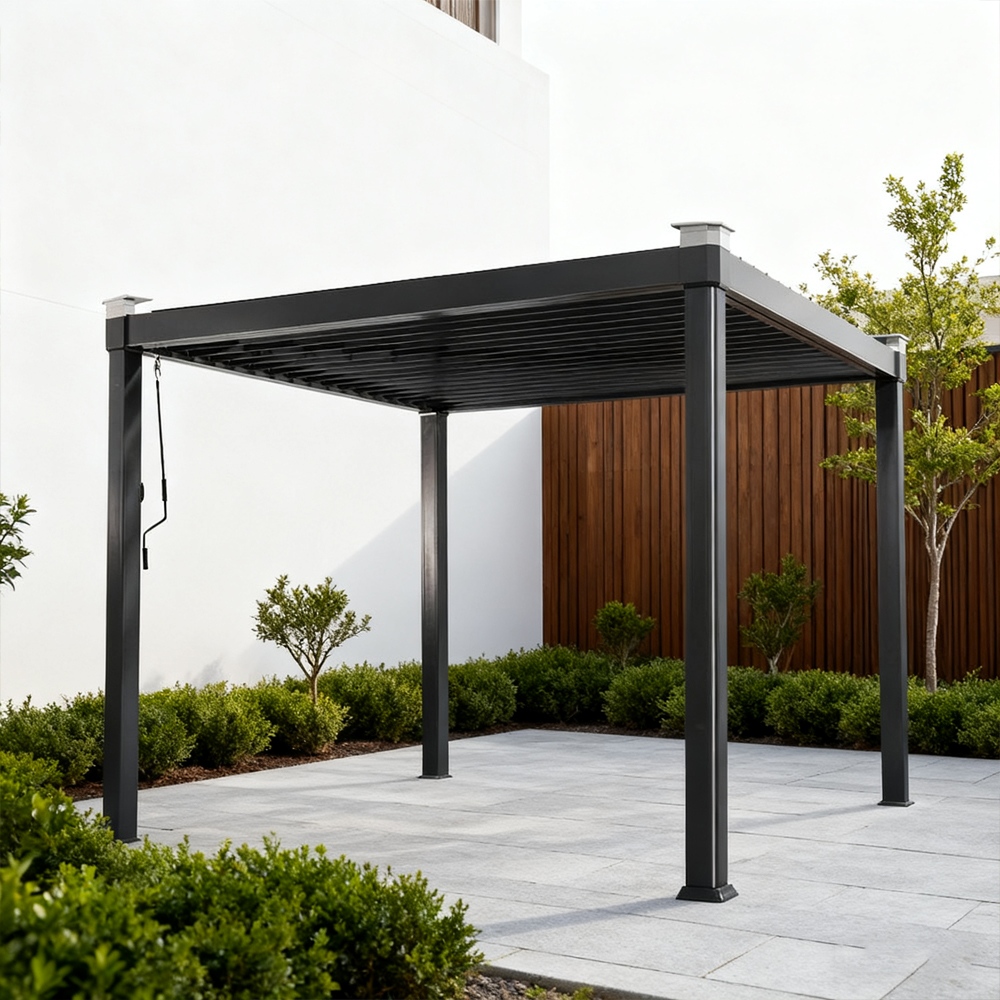
This material consideration becomes especially important when solar lights are integrated into architectural elements such as pergolas, gazebos, or patio covers. Structures like the solar lights-integrated aluminum pergola system benefit from hardware that matches the structural material in both longevity and corrosion resistance. Mixing high-grade aluminum framing with plastic-cased light fixtures creates a mismatched lifespan gap, where the lights degrade long before the structure requires attention.
Solar panel quality also plays a role in long-term durability. Monocrystalline panels are more efficient and compact than polycrystalline alternatives, and they are typically encased in tempered glass that resists hail, impact, and UV degradation more effectively. Over a ten-year horizon, the efficiency retention of the solar panel directly determines how reliably the battery charges — making panel quality a durability metric as much as an efficiency metric when comparing solar lights.
Integrated vs. Standalone Solar Light Configurations
Built-In Solar Lights in Outdoor Structures
A growing segment of the solar lights market involves products designed to integrate directly into outdoor architectural structures rather than function as standalone fixtures. These integrated systems embed the solar panel, battery, and LED components within the structural elements of pergolas, louvered roofs, or canopy frames. The result is a seamlessly designed outdoor space where illumination is built into the architecture itself, eliminating surface-mounted fixtures and visible wiring entirely.
Integrated solar lights often command a higher upfront cost but deliver superior performance in terms of both aesthetics and functionality. Because the solar panel can be positioned at an optimal angle within the structure's design, charging efficiency is maximized. The battery is also housed within the protected frame, reducing exposure to temperature extremes and moisture — factors that degrade standalone units exposed to open air. For homeowners or designers building a cohesive outdoor living space, integrated solar lights represent the highest-value configuration when comparing across product types.
Standalone Solar Lights for Flexibility and Retrofit
Standalone solar lights offer installation flexibility that integrated systems cannot match. They can be repositioned, upgraded individually, or added to an existing outdoor space without structural modifications. For those who want to enhance an existing patio or garden without undertaking a construction project, standalone solar lights remain the most practical and cost-accessible option.
The tradeoff is that standalone units are more exposed to the elements and therefore must be selected with particular attention to IP rating, material quality, and battery chemistry. A standalone solar light mounted on a fence post faces more direct weathering than one embedded in a pergola beam. When comparing standalone options, prioritize products with aluminum or stainless steel construction, premium lithium battery cells, and at least IP65 protection to ensure reliable multi-year performance without frequent replacement or maintenance interventions.
Making the Right Comparison Decision
Defining Your Performance Requirements First
The most effective way to compare solar lights is to begin with a clear articulation of your performance requirements rather than leading with price. Determine the minimum lumen output needed for your specific application. Assess how many hours of operation per night your usage pattern requires. Evaluate whether the installation environment demands IP67 or higher protection. Only after establishing these baseline requirements should you begin filtering products by specification sheets.
Many buyers make the mistake of comparing solar lights primarily on price, only to discover that a lower-cost unit fails to meet their brightness needs, runs out of power before dawn, or deteriorates within a single season. A structured comparison that weighs brightness, battery capacity, and durability together against the total cost of ownership — including replacement frequency — consistently reveals that mid-to-high-tier products deliver better value per year than budget alternatives.
Evaluating Warranty and After-Sales Support
Warranty terms are often the most honest signal of a manufacturer's confidence in their product's durability. Premium solar lights typically carry warranties of two to five years on both the LED and battery components. A short or limited warranty on a product marketed as durable should prompt additional scrutiny. When comparing two otherwise similar solar lights, the one with a longer, more comprehensive warranty is likely built with higher-grade components and better assembly standards.
After-sales support, including the availability of replacement batteries and components, is also worth factoring into the comparison. Solar lights with proprietary battery formats that cannot be independently sourced create a dependency on the manufacturer for ongoing maintenance. Products that use standard battery formats allow more flexibility in the long run and reduce the total cost of ownership over a multi-year ownership period.
FAQ
What lumen level is adequate for patio or pergola solar lights?
For ambient lighting in a covered patio or pergola setting, solar lights in the 200 to 600 lumen range typically provide comfortable illumination without harsh glare. If the space also requires task lighting or security visibility, units rated above 800 lumens with adjustable modes offer greater versatility for different evening needs.
How long should a solar light battery last before needing replacement?
A quality lithium-ion or LiFePO4 battery in a well-made solar light should retain at least 80% of its original capacity after 500 to 1000 charge cycles, which equates to roughly two to three years of daily use. Lower-grade batteries in budget solar lights may show significant capacity decline within the first 12 to 18 months, especially in climates with extreme temperature variation.
Is aluminum housing significantly better than plastic for outdoor solar lights?
Yes, aluminum housing is substantially more durable for outdoor solar lights over a multi-year time horizon. Aluminum resists UV-induced brittleness, does not expand and contract as dramatically with temperature changes, and holds up far better against physical impact and moisture. For permanent or semi-permanent outdoor installations, aluminum-bodied solar lights consistently outperform plastic alternatives in both longevity and appearance retention.
Can solar lights be effectively integrated into pergola or canopy structures?
Absolutely. Integrated solar lights designed for pergola and canopy systems offer a clean, architectural solution that eliminates visible wiring and surface-mounted hardware. When the solar panel and battery are built into the structural frame, both charging efficiency and component protection improve compared to standalone mounted units. This configuration is particularly well-suited for aluminum pergola systems designed with built-in solar illumination features, delivering a seamless and high-performance outdoor lighting environment.